
Why CES Brands Are Rethinking How They Measure Commerce Performance in 2026

Why CES Brands Are Rethinking How They Measure Commerce Performance in 2026
 By Paul Van Wert
Every January, CES sets the tone for the year ahead.
Yes, it’s where breakthrough technology is unveiled. But for brands, CES has quietly become something else: a reality check.
Behind the product launches, AI demos, and packed agendas, many conversations sound surprisingly similar. Commerce leaders compare notes and arrive at the same conclusion: We have more data than ever — and less clarity than ever.
As brands head into 2026, measurement is no longer a background function. It’s becoming a strategic fault line. And that’s why so many CES brands are rethinking how they measure commerce performance right now.
Measurement Didn’t Fail. The World Changed.
Commerce has evolved faster than the systems used to measure it. In just a few years, brands have added layers of complexity:
-
Retail Media Networks across Amazon, Walmart, Target, and others
-
DTC sites alongside marketplaces
-
Paid social, search, CTV, DOOH, and in-store activations
-
Separate teams, tools, and dashboards for each channel
Each channel reports “performance.” Each report tells a different story.
The result is not a lack of data, but a lack of alignment.
Measurement models that once worked in simpler, slower media environments now struggle to keep up with omnichannel commerce. Reporting lags reality. Optimization happens after campaigns end. And critical decisions are still made using proxy metrics that don’t reflect real business impact.

Why 2026 Is the Breaking Point
Brands aren’t rethinking measurement because it’s trendy. They’re doing it because the pressure is real and growing. Several forces are converging at once:
Budgets are tighter.
Every dollar is scrutinized more closely than before.
Retail Media spend keeps rising.
And leaders are demanding proof that it drives incremental sales, not just channel-level ROAS.
Campaigns move faster.
Waiting weeks or months for results is no longer acceptable when optimization needs to happen while campaigns are live.
CFO expectations are changing.
Measurement is no longer just a marketing concern. It’s a business accountability issue.
In this environment, “good enough” measurement becomes a liability. 2026 demands something different.
The Shift CES Brands Are Making
At CES, many brands are aligned around the same realization: measurement must move from reporting to decision-making.
That shift looks like this:
-
From after-the-fact analysis to in-flight visibility
-
From channel silos to business-level outcomes
-
From proxy metrics to true sales lift and incrementality
-
From fragmented dashboards to a single source of truth
This isn’t about adding another tool. It’s about changing how performance is understood and acted upon.
Leading brands are asking harder questions:
-
Which channels are actually driving incremental revenue?
-
Where are we over-investing without realizing it?
-
How do online and offline activations work together?
-
How can teams optimize while campaigns are still live?
These questions define the next era of commerce performance.
What Modern Commerce Measurement Looks Like
As brands rethink their approach, a new standard is emerging. Modern commerce measurement is:
-
Fast: designed for real-time or near real-time decision-making
-
Unified: covering all channels, not just digital or retail in isolation
-
Outcome-focused: tied directly to sales lift and business impact
-
Scalable: not dependent on identity, panels, or slow manual processes
-
Actionable: built to optimize performance, not just explain it afterward
Most importantly, it reflects how commerce actually works today: interconnected, dynamic, and always on.
Where Pēq Fits In
Pēq was built for this shift. Rather than retrofitting legacy models, Pēq is designed for the speed and complexity of modern commerce.
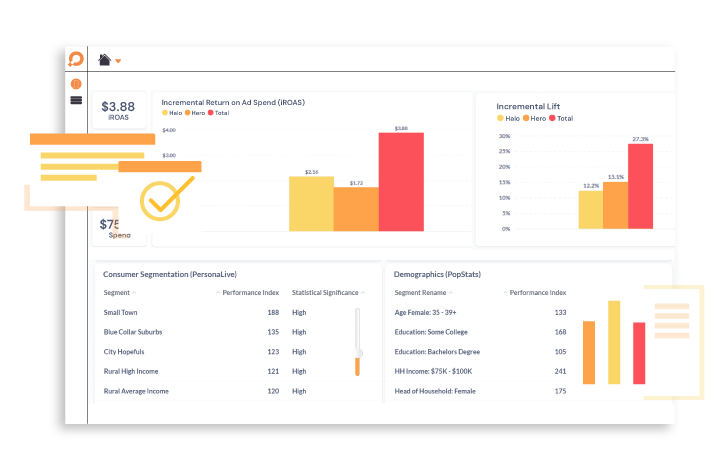
The platform provides real-time, identity-free measurement across online and offline channels, enabling brands to quantify true incremental ROAS while campaigns are live.
By unifying performance across retail media, marketplaces, DTC, paid media, and in-store activity, Pēq helps teams move beyond fragmented reporting toward confident, data-driven decisions. Not tomorrow. Not next quarter. But while campaigns are actually running.
Why CES Is the Moment That Matters
CES happens at a critical time.
Budgets are being finalized. Strategies are being locked. Measurement decisions made now will shape performance for the entire year.
That’s why so many of the most important conversations at CES aren’t about new technology — they’re about how to prove what works in a more complex, more accountable commerce landscape.
CES isn’t just a showcase. It’s where priorities crystallize.
An Invitation to Compare Notes
If you’re attending CES and rethinking how you measure commerce performance in 2025, you’re not alone.
This is the conversation many brands are already having — quietly, urgently, and with a clear sense that the old models no longer fit the world ahead.
If you’d like to compare perspectives, share challenges, or explore what modern commerce measurement can look like in practice, we’d love to connect during CES.
Because what happens at CES shouldn’t stay at CES — especially when it comes to performance decisions that define the year ahead.
👉 Book a Meeting